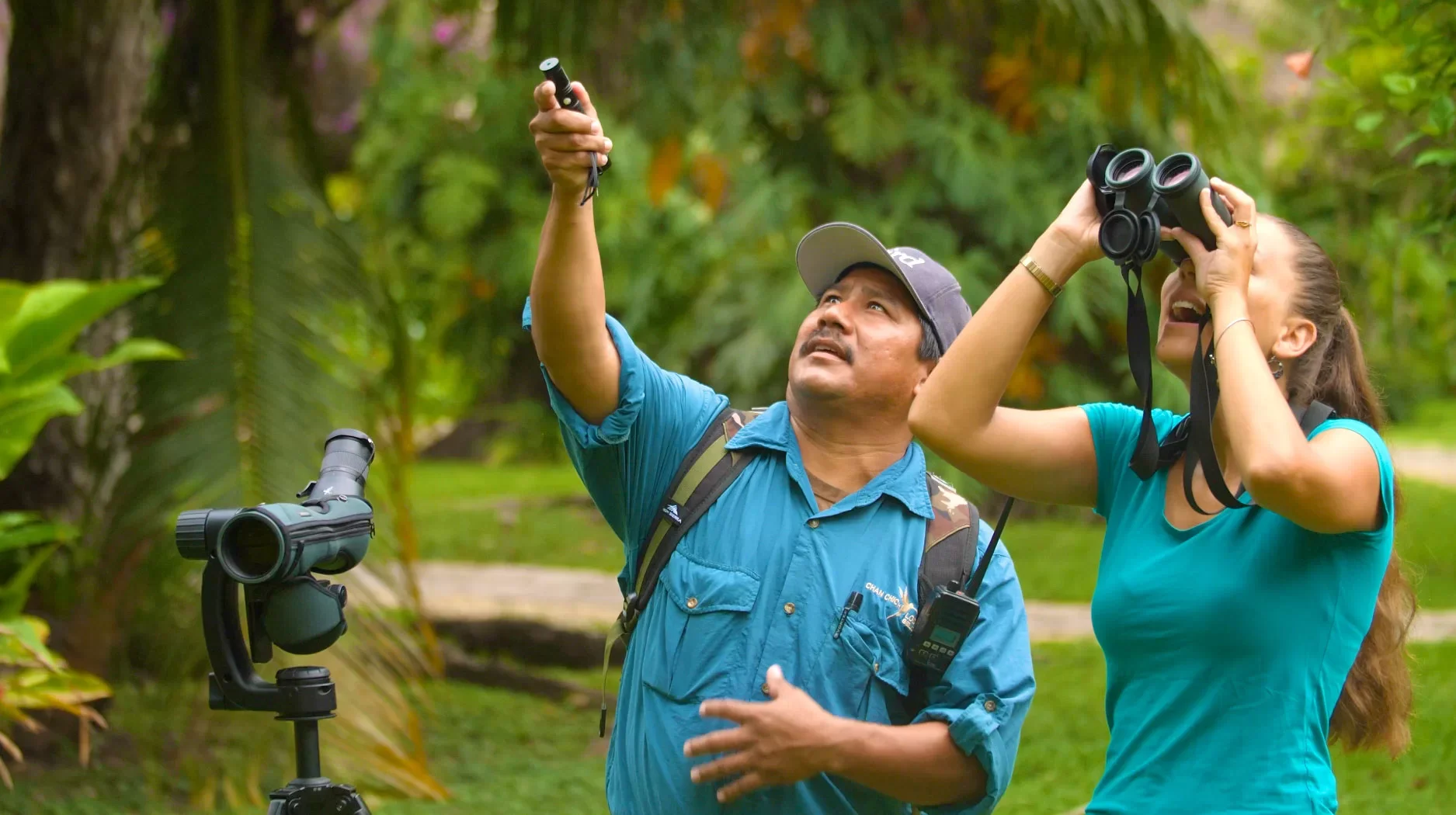
Before you see much of the rainforest, you hear it. A howler monkey calls somewhere beyond your veranda. Birds answer from different heights in the canopy. Beneath those louder sounds, insects create a steady background rhythm.
It is an absorbing way to wake up. It is also an invitation to pay attention.
Earth Day takes place every year on April 22, encouraging people around the world to learn about and protect the natural environment. Spending time in a rainforest gives that purpose a tangible setting: a place where you can begin to understand what protecting an ecosystem actually means. Learn about Earth Day’s origins.
At Chan Chich Lodge in northwestern Belize, that understanding begins with slowing down, looking closely, and asking questions about the life around you.
Start by Listening Before You Look
On your first morning, resist the urge to identify every sound immediately. Spend a few quiet minutes on your veranda or at a place recommended by your guide.
Notice where the calls come from. Are they high overhead, close to the ground, or moving through the trees? Can you distinguish a repeated phrase from a single sharp note? What changes as the morning grows brighter?
This simple exercise gives a rainforest walk a different purpose. Instead of searching only for a dramatic sighting, you begin noticing patterns.
For a guided outing, ask your guide to help you recognize a few common calls. Learning to distinguish even two or three sounds can make the forest feel more familiar throughout your stay.
Look Beyond the Animals on Your Wish List
A toucan or a monkey may be what first draws your attention, but smaller observations can be just as memorable.
Look for a leaf with carefully cut edges, a fallen branch beginning to soften, or a patch of seedlings reaching toward an opening in the canopy. Ask your guide what might explain what you are seeing.
Useful questions include:
What signs suggest an animal passed through recently?
Why are young trees growing densely in one place and sparsely in another?
What should we leave undisturbed, even if it appears lifeless?
Which changes does your guide notice when returning to this trail?
You do not need specialist knowledge to enjoy these details. Curiosity is enough. A good question often turns an easily overlooked moment into the part of a walk you remember best.
Understand What Your Stay Supports
Conservation claims are more meaningful when they explain what is protected and how tourism contributes.
Chan Chich’s private reserve covers 30,000 acres. Income from guest stays helps keep the reserve and its conservation work running, rather than providing a fixed conservation donation per booking.
The neighboring Belize Maya Forest is a separate protected area held by the Belize Maya Forest Trust. In 2021, Gallon Jug Estate joined a coalition of conservation partners that helped secure its protection. These distinctions matter because they give visitors a clearer understanding of the landscape and the lodge’s role within it. Read about conservation at Chan Chich.
Before choosing a nature-focused stay, it is helpful to ask any property:
What land or habitat does the property help protect?
How does guest income support that work?
Which conservation activities are ongoing?
Are advertised guest activities available during my travel dates?
Clear answers help you make an informed choice about where to spend your time.
Make Wildlife Watching Considerate
A meaningful wildlife encounter gives an animal room to continue its day.
On a forest walk, follow your guide’s instructions about distance, noise, and movement. If an animal moves away, allow it to leave. Avoid feeding wildlife or trying to attract its attention for a photograph.
A few practical habits can improve the experience:
Keep voices low so others can hear movement and calls.
Use binoculars to observe details from a comfortable distance.
Stay on designated routes and follow your guide’s lead.
Ask before using flash or directing a light toward an animal.
Accept that some encounters will be brief, distant, or partly hidden.
Wildlife viewing involves uncertainty. Let that become part of the pleasure. Watching an animal behave naturally, even for a moment, can be more rewarding than getting the photograph you imagined.
Give Birdwatching a Smaller, More Interesting Goal
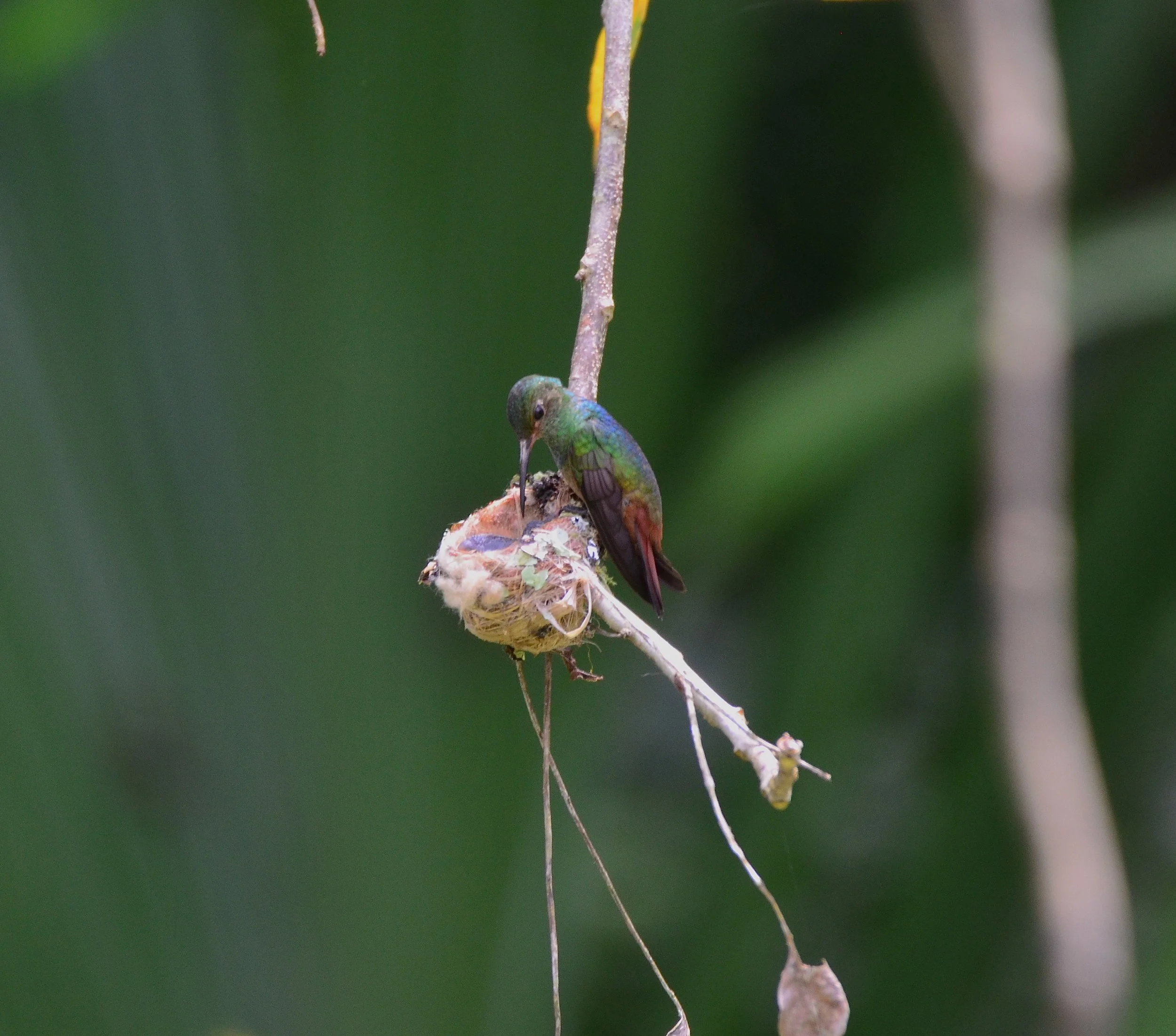
Chan Chich has more than 370 recorded bird species, which can make it tempting to focus on how many you can find. For a first visit, a smaller goal may offer more enjoyment. Explore birding at Chan Chich.
Choose one bird and spend time watching its behavior.
Where does it perch? Does it search along a branch, visit fruit, or disappear into dense foliage? Is it alone or moving with other birds?
Ask your guide to help you learn one identifying feature and one behavior. Later, write them down in your own words. Even if you forget the name, you will have practiced looking carefully, a skill you can take home to your garden, neighborhood, or nearest park.
Pack to Participate Comfortably
Being comfortable makes it easier to stay attentive outdoors. For time in the rainforest, bring lightweight clothing, comfortable closed-toe walking shoes, insect repellent, a refillable water bottle, and rain protection.
Binoculars are useful if you have them. A small notebook can be equally worthwhile for recording a call, a question, or an observation you want to revisit.
Before arriving, ask the lodge which guided experiences are available and what equipment is recommended. Any special Earth Day activities should be confirmed for your dates.
Leave room in your schedule, too. An unhurried morning gives you time to follow an interesting sound, ask another question, or simply sit and watch.
Let April 22 Be the Beginning
You do not have to become an expert during a rainforest stay. Learning to recognize a bird call, understanding how a reserve is supported, or becoming more considerate around wildlife are worthwhile beginnings.
At Chan Chich Lodge, we invite you to spend Earth Day close to the forest and give yourself time to discover its details. Come with questions, let your guides deepen your understanding, and leave with observations that stay with you long after the journey home.
April 22 is a reason to begin paying closer attention. The connection can continue throughout the year.